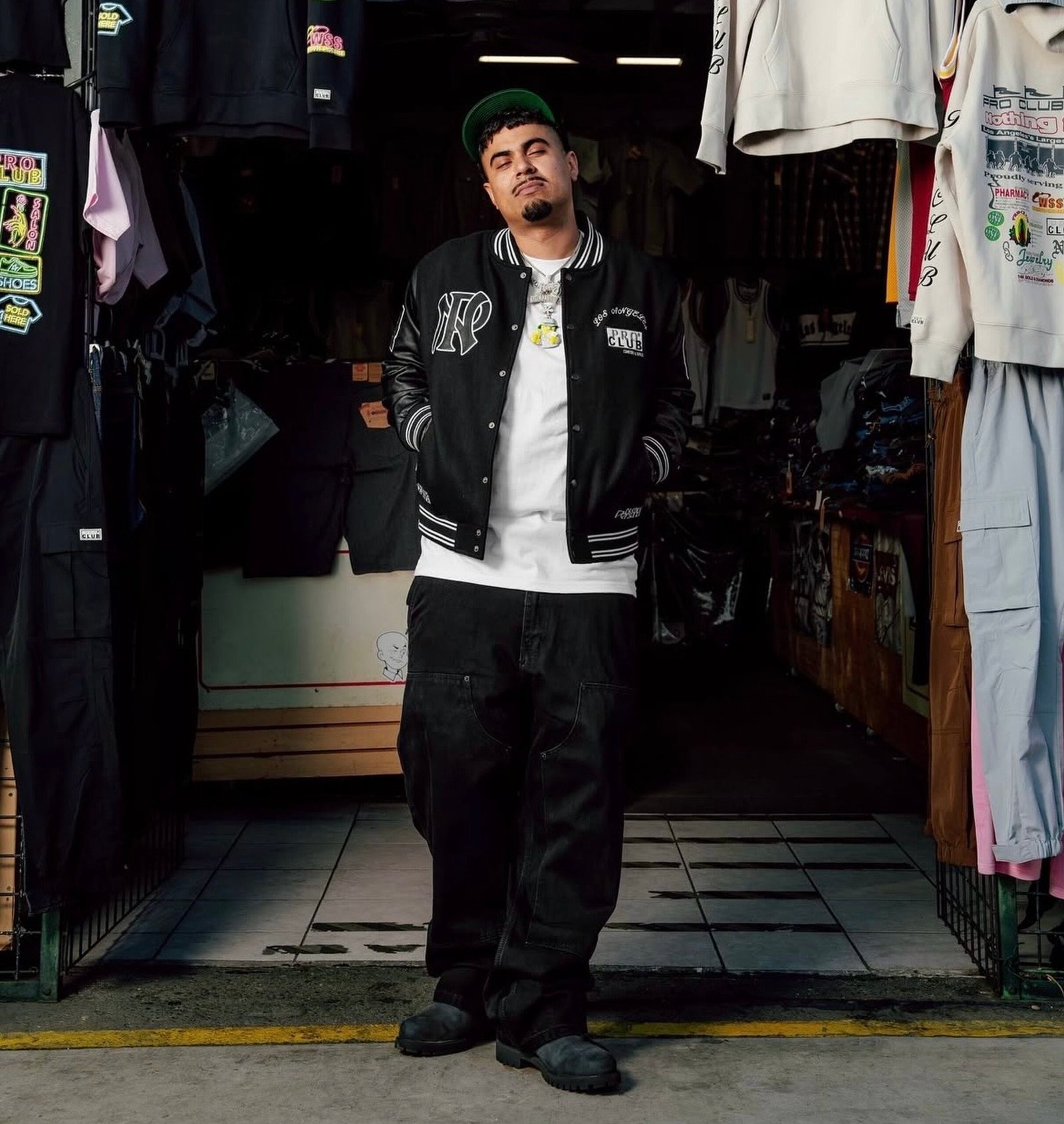
Blazzy’s rise didn’t unfold inside a design school or some polished showroom; it grew out of Southeast Los Angeles, where creativity often starts as survival and turns into its own kind of language. Before his name floated through streetwear circles and podcast feeds, he was just a kid in Paramount with a spray can, chasing a feeling he couldn’t yet describe.
In those early years, he tagged walls as an attempt to carve out a presence in a city that rarely hands young artists a clear lane. What began as simple tags evolved into stencils, then full pieces that found their way to Melrose art events, where visitors wandering past caught a glimpse of what would later become his distinctive design DNA. His biggest spark came after discovering Shepard Fairey, the street artist who turned political imagination into global iconography, and for the first time Blazzy realized street art and clothing could share the same pulse.
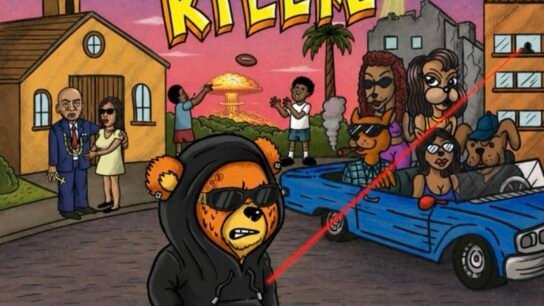
Graphic design became his entry point into the world beyond graffiti. He sharpened his craft creating album artwork for underground rappers. That pathway slid naturally into merch, where he made a name crafting pieces that spoke directly to rap fans. One of his earliest breakout moments came with a “Free Tay-K” tee that spread fast across the internet, but the real turning point hit when his “Carter V” shirt for Lil Wayne, designed in collaboration with Chinatown Market, became the top-selling item in Wayne’s entire merch run. It arrived just nine months after he left his airport warehouse job at LAX and committed fully to design, a moment he often describes as the point where everything snapped into place.
That momentum pushed him toward building something that felt personal, lasting, and unmoved by hype cycles. The result was Nothing Personal, a brand that treats streetwear like a medium instead of a trend. Blazzy uses it to channel commentary, grief, humor, and cultural pressure points. Some releases, like his “Say No to Fentanyl” pieces, came directly from losing friends to overdose. Others, like the candle shaped like a police cruiser. Through all of it, he insisted that he didn’t want to chase cool; he wanted to release items with weight, intention, and a purpose.
Music has always been the undertow beneath his work. In the mixtape-heavy era dominated by artists like Gucci Mane and the offbeat, expressive visuals of figures like Lil B, Blazzy found a blueprint for blending sound, culture, and design. Photoshop became his sketchbook. Mixtape aesthetics became his compass. That hybrid upbringing in both visual and musical worlds made the transition to fashion feel natural, as though he had always been preparing for it without realizing.
As his name circulated more widely, Blazzy grew into a media presence—talking openly about his path, his creative process, and the hurdles of navigating underground culture while running a business.