Kang Frvr’s story doesn’t begin on a big stage or a viral clip—it starts in motion. Long before millions would recognize his name or his style, he was a kid in Long Beach, California, finding rhythm wherever he could. Music was already in his blood before he could properly articulate it; by the age of three, Kang was beatboxing and rap battling his brother, sharpening instincts that would later define his creative identity. But it was dance that gave those instincts a physical form.
At just 11 years old, during a sixth-grade dance in Long Beach, Kang and his brother entered a dance battle that would quietly change everything. What began as a moment of youthful confidence turned into an obsession. Dance became more than movement—it became language, competition, and self-expression. Even then, the foundation was being laid for an artist who would eventually blur the lines between dancer, performer, and musician.
While dance was capturing attention, music never left the picture. Kang and his crew had been making music even longer than they had been dancing, treating rap, rhythm, and performance as inseparable elements of the same culture. That balance would later become central to his artistry.
Around the age of 15, Kang helped form the original version of what would become The Future Kingz (TFK). Back in Los Angeles, the group began as a jerkin’ crew called The Go-Getters, made up of childhood friends Jalen, Chris Smith, Jay Tray, and Kang himself. They were young, creative, and fully immersed in the energy of the movement, using dance as both identity and ambition.
Everything shifted when Kang and his brother moved to Chicago at 16. Leaving Los Angeles meant leaving behind close friends and the original structure of the group. Instead of letting it end there, Kang adapted. The group condensed into just him and his brother, operating under the name the tf kids while they rebuilt from the ground up. What could have been a setback became a proving ground.
In Chicago, Kang Frvr and his brother carved out a reputation through relentless dance battles and performances, steadily reestablishing their name. Those years were about survival and sharpening skill—learning how to command a crowd, how to stand out, and how to stay disciplined when the spotlight wasn’t guaranteed. Over time, TFK evolved again, growing into the fully realized Future Kingz known today.
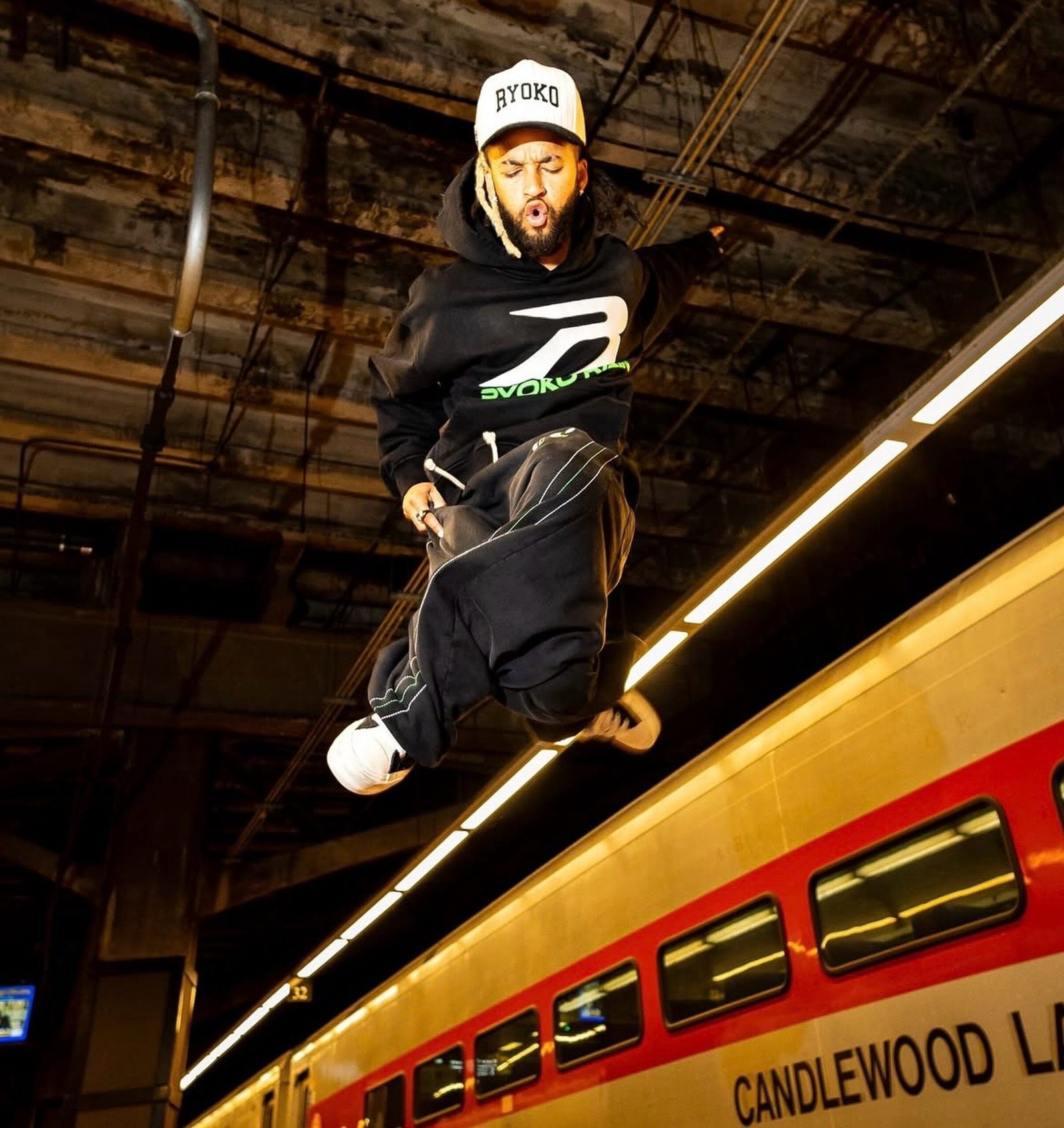
The true turning point came with America’s Got Talent. Kang auditioned for the show four years in a row before finally being invited to audition by a talent scout. That persistence paid off in a way few experiences can replicate. His performance—highlighted by creative subway-style routines—resonated instantly. The audition went viral, pulling in hundreds of millions of views and introducing his style to a global audience.
Kang has described AGT as “the biggest stage in the world,” a platform that took something rooted in local culture and amplified it worldwide. More importantly, it brought unprecedented visibility to the jerkin’ dance movement itself. What once lived in specific neighborhoods and scenes was suddenly being celebrated across screens everywhere. In his words, it “catapulted” his career, turning years of underground grinding into a moment of global recognition.
Despite the exposure, Kang Frvr has remained grounded in the values that carried him there. He consistently credits his success to grind, grit, work ethic, and humility—principles that show up not just in interviews, but in how he moves creatively. For Kang, longevity matters more than hype.
That mindset is especially evident in his music. This year, Kang Frvr released a new project titled YKYDFUR, a nine-track body of work that showcases both his versatility and his deep-rooted connection to his community. The project features an expansive list of collaborators, including LAHiggz, DashxDigital, D Realz, Ben J of New Boyz, Priceless Da Roc, Gold Franco, Soski, Chalice, Young Sam, James Dillion, Kari Atare, The Future Kingz, LENSTRUMENTAL, and Cold Flamez. Rather than chasing trends, the project feels like a reflection of Kang’s journey—layered, collaborative, and rooted in authenticity.