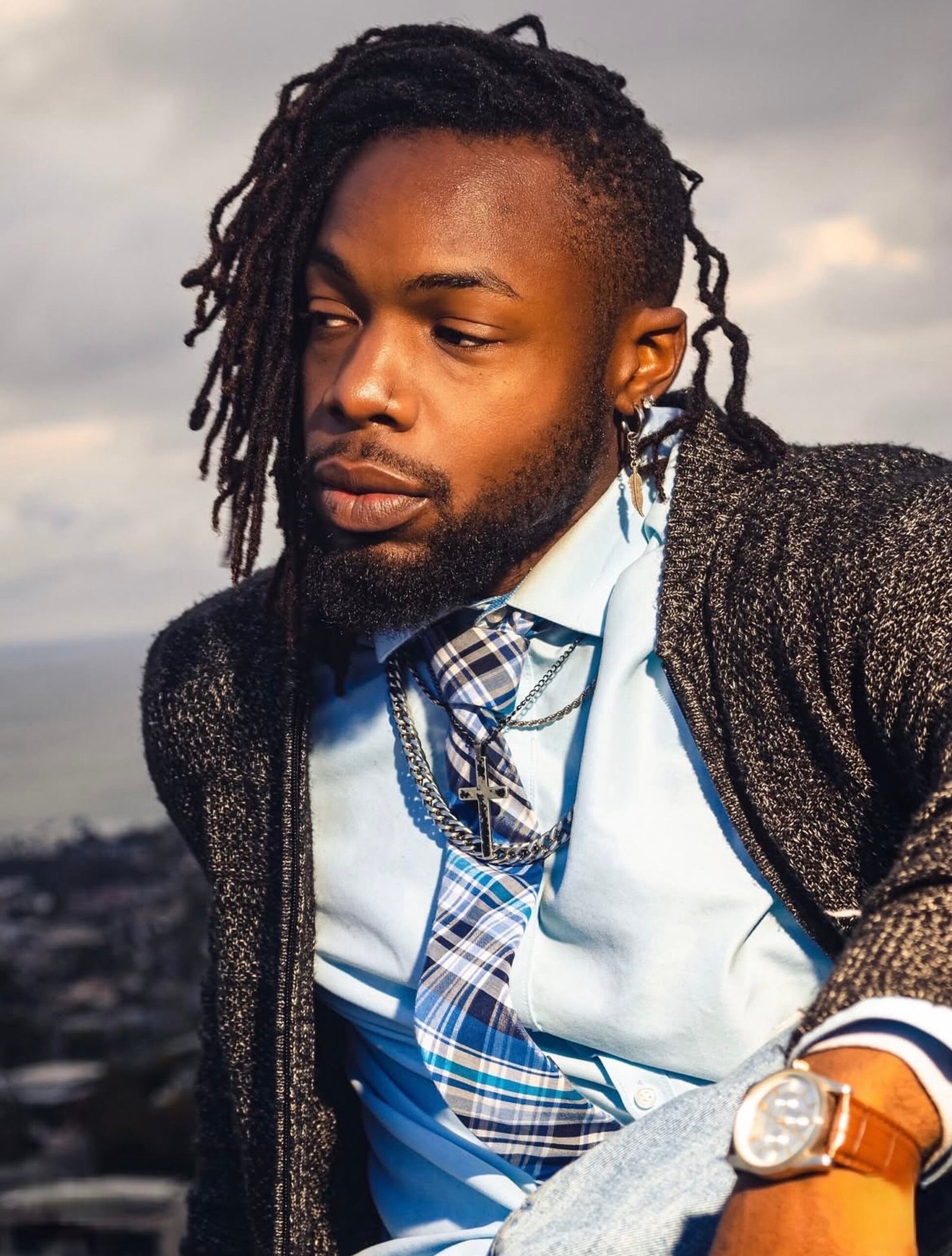
Chuck Die$el was born in Wooster, Ohio, a small town that shaped his early years, and he is now based in Los Angeles, California. Music has been the one constant in his life. As a child, he moved frequently and attended five different schools before middle school. Stability came from two places: his grandmother and music. His grandmother raised him for about half of his childhood and kept him grounded in faith and structure. They were in church three to five times a week, and he was not exposed to radio or explicit music early on.
When he moved to Cleveland around age 10, his world expanded. He discovered that the local library carried CDs, and he began exploring artists like Eminem, Ludacris, and the Beastie Boys. Then he found Kanye West’s albums The College Dropout and Late Registration, which had a lasting impact on him. He also remembers seeing a copy of 50 Cent’s Get Rich or Die Tryin’ at the library. That moment stayed with him and felt like an introduction to a new level of ambition and expression.
He had already started rapping by then. At 10 years old, his older cousins pushed him into a freestyle battle with his cousin Dhasae. He won. Proud of himself, he ran home and rewrote as much of his freestyle as he could remember. The next day he brought it to school and shared it with friends. That moment changed how he viewed writing. By fourth grade, he was tapping out beats with pencils on desks and rapping at the same time. His uncle, who had been signed to an independent label in the 1990s before serving time, trained him with rap drills, penmanship exercises, and freestyle practice from age 12 into his late teens. Those early lessons sharpened his skills.
Outside of music, he was an avid reader, finishing over 100 books a year during much of elementary school. His mother introduced him to Langston Hughes in second and third grade. Reading during long church services and Bible studies developed his love for language, imagery, and storytelling. Growing up near rougher areas in Cleveland, he was not allowed outside often, so movies became a family tradition. They would spend full days at the dollar theater and then shop at places like TJ Maxx and Value City. Around that time, he got his first radio and spent years falling asleep to music. Later, with a Game Boy Advance SP and late-night radio playing, he developed a deep ear for melody and mood.
Sports were also a major part of his life. He played basketball at the Salvation Army gym, Freedlander Park, and especially Christmas Run Park, which became central to his development. Between his freshman and sophomore years of college, he committed to improving his craft. He spent at least four hours a day, five days a week, writing at Christmas Run Park. He focused on structure, flow, and delivery. Years later, he returned there to film his “Don Jon” music video, bringing his journey full circle.
In high school, he ran track, played football, and participated in drama club and speech and debate. At one point, he was involved in 11 extracurricular activities while holding a job. Running became mental therapy, especially during writer’s block. Long runs with headphones helped him understand tempo and rhythm. Speech and debate, along with drama, built his stage presence and confidence.
After high school, he attended Ohio University and studied performance after discovering a passion for acting. His days were filled with rehearsals and classes, and his nights were spent writing and recording music from midnight until 4 a.m. By senior year, he had built a home studio. His first official EP, #TrapDiesel, was released during the final stretch of the CD era, before streaming took over. That project marked his early professional entry into music and established his independent mindset.
He recorded his first freestyle at 10, his first official song at 13 on MySpace, and by 16 he had his own mic and laptop setup. Around 20, he began investing in licensed beats, and by 23 he was working in professional studios with established engineers.
His influences include Drake, Lil Wayne, Jay-Z, Kid Cudi, Childish Gambino, Wiz Khalifa, Mac Miller, and Curren$y, along with gospel and R&B. He describes his sound as emotional but confident, blending hip-hop, melodic rap, R&B, and alternative elements. His music is introspective and ambitious, with energy that still connects in live settings.
Over the years, he has recorded both independently and in professional studios. His early EP was largely recorded and mixed in his college home studio under TopNotch Music/Universal. More recent projects, including Wolves Don’t Mosh, were recorded between Beachside Studios in Inglewood, Create Reality Records in North Hollywood, and his own studio setups in Los Angeles. Working in both large studios and personal creative spaces has shaped his versatility.
His most recent releases include the Wolves Don’t Mosh project, the single “No Liver,” and a Valentine’s Day music video. He is preparing to release a new single and video titled “Lovely Lady,” along with two additional videos from the Love Wolf EP, a three-track project called Love Wolf: After Hours, and another project titled Wolf on the West.
Chuck Die$el credits much of his progress to the people around him. He thanks his producer and first label signee Jacky Clouds, videographer Eddie Lens, mentors Isaac and Randy from Undercaste Studio, and engineer Steve Sola for their guidance. He is especially grateful to his brother Damion, who invested in his career and shares ownership of his first EP. He also honors his mother, grandmother, siblings, close friends, and early supporters who helped fund his first real studio setup. Their belief, combined with years of discipline and work, continues to fuel his path forward.