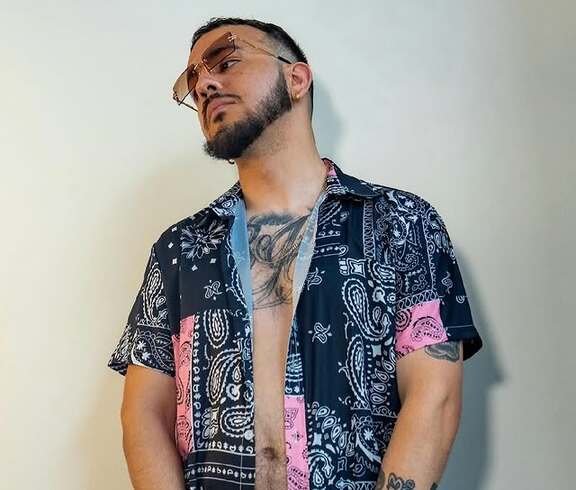
Born Benjamin Becerra, Fade Dresto didn’t stumble into music the way some artists do. His earliest beats weren’t made on laptops—they came from the click of classroom pencils, pen caps tapping rhythm on laminated desks while he hummed melodies only he could hear. Luckily, his mother saw what was brewing before he even knew it himself. She enrolled him at Lyndon B. Johnson Elementary in El Paso, a school known for treating music education like a sacred craft rather than an elective. There, Benjamin picked up the trombone and the trumpet, giving structure to the rhythms that used to spill out of him unplanned.
That early mix of discipline and instinct shows up today in the way Fade moves. He blends Hip-Hop, Pop, and R&B, but he never sounds like he’s trying to impress a playlist—everything comes from a lived place. He carries Texas roots in his tone, but his delivery is brushed with California cool, the type of balance you can’t fake. His influences—UGK, Lil Wayne, James Brown—make sense once you hear him. There’s soul, there’s swing, there’s slickness, and underneath it all is a heartbeat that feels uniquely his.
Even his name is a statement. “Fade,” a childhood nickname, became an acronym: Fulfilling A Dream Everywhere. “Dresto,” meanwhile, pays homage to Gangsta Dresta, a West Coast figurehead connected to the lineage of Eazy-E and the golden era of Compton storytelling. Those roots speak to what he values—origins, authenticity, and the responsibility of carrying sound forward.
But Fade isn’t shy about what bothers him in today’s landscape. He sees a music industry warped by trend-chasing and darkened by violence. Too many artists taken early. Too many names remembered for the tragedy instead of the music. To Fade, being an artist isn’t just about expression—it’s about direction. He wants to stand as the alternative voice, the one reminding everyone that music is still a business built for longevity. A long career, a long life, and a chance to evolve—those are the priorities.
“Music should reflect who you were, who you are, and who you’re becoming,” he says, comparing the journey to a butterfly pushing out of its cocoon. You honor the struggle, but you don’t stay trapped in it. You transform, then show others it’s possible.
“Gotta Get Away” feels exactly like that—an escape, but also a step forward. A reminder that sometimes the only way to grow is to move, even if it means leaving parts of yourself behind. Fade Dresto isn’t running from anything. He’s running toward what he’s always been meant to do.