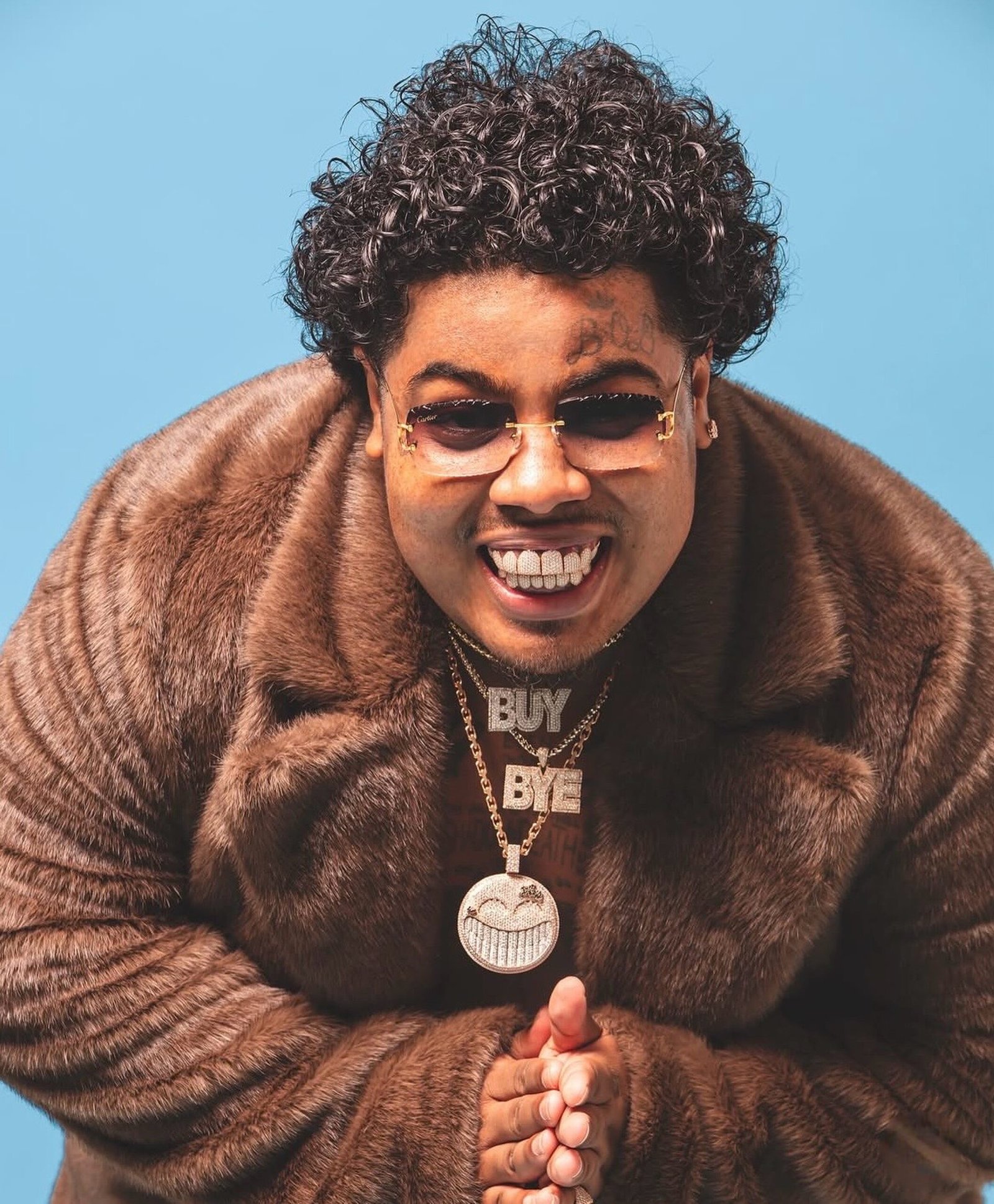
Before the music, before the recognition and before OVO, Smiley was just a kid growing up in Toronto trying to figure himself out.
Born in Montreal to a Haitian father, Smiley grew up with a connection to his Haitian background that he admits he is still learning about. He hasn’t always been fully in tune with his roots, but it’s something he wants to understand more as he gets older.
His early years were shaped by a different kind of education as well. Smiley attended French schools through grade 11 before eventually being expelled from an English school. Outside of school, the neighborhood became another form of education.
He describes growing up in a low-key Toronto neighborhood that was also filled with hustlers. The environment had its own hierarchy, with older figures influencing what was happening around them and street activity being a regular part of the surroundings. Looking back, Smiley compares some of those dynamics to The Wire.
At first, he wasn’t the kid looking for trouble. He describes himself as more of a homebody who enjoyed playing video games. That changed around 15 or 16, when he says he officially “jumped off the porch” and began getting involved in the streets. It became part of adapting to the environment he was growing up in.
Music was always somewhere in the background. Smiley grew up listening to artists like 50 Cent, Lil Wayne and Drake, but he never really had one favorite artist whose entire catalog he followed. Instead, he connected with individual songs. It was the records themselves, the feeling they gave him and the moments attached to them that stayed with him.
Ironically, Smiley never set out to become a rapper.
His introduction to music happened almost by accident while hanging around his neighborhood. His friends would freestyle, and although he wasn’t a rapper at the time, he eventually helped set up a studio session for some of them. During the session, his friends pushed him to get on a song.
He wrote something quickly, stepped into the booth and gave it a shot.
What started as fun and games turned into something people around the city began talking about. The response gave Smiley a reason to take music more seriously. What wasn’t supposed to be a career suddenly started looking like one.
His rise didn’t happen overnight. Smiley describes having small moments of success throughout the early stages of his career, slowly building his name and gaining momentum. Then came “Over The Top.”
The song, featuring Drake, became the turning point.
About four months after its release, Smiley says he woke up to a completely different reality. The recognition had reached another level. He could get into an Uber or walk into a club and people knew who he was. The music had taken him from being known around his neighborhood and city to becoming an artist with a much bigger presence.
The relationship with Drake and the road to OVO developed naturally. Boy Wonder, a producer closely connected to Drake, discovered Smiley’s music and shared it. Drake eventually started paying attention, and the two developed a genuine connection.
Smiley says people around them noticed similarities in their personalities, which helped build the relationship beyond music. And while releasing music with Drake could have made people assume a deal with OVO happened immediately, Smiley explains that wasn’t the case.
There were conversations over time. Smiley was initially signed to Warner Records, but as his relationship with Drake and the OVO movement continued to grow, he eventually expressed that he wanted to be part of it.
That led to the transition from Warner to OVO.
Since then, Drake has also played a role in Smiley’s growth beyond simply being a collaborator. One of the biggest pieces of advice Drake has given him is to remain confident in what makes his sound different. For Smiley, that’s important because his music has never been about trying to completely fit into somebody else’s mold.
His catalog tells the story of that progression. Songs like “Price,” “Gretzky,” “Living,” “90210,” “Over The Top” featuring Drake, “2 Mazza” featuring Drake, “Two Tone” and “DVP” have all helped shape his journey and establish his identity.
What makes Smiley’s story stand out is that music wasn’t necessarily the plan from the beginning. He came into it naturally, almost unexpectedly, and turned something that started with his friends in the neighborhood into a career that has taken him far beyond Toronto.
From a kid who preferred staying home playing games, to finding himself caught up in the streets, to eventually stepping into a studio because his friends told him to rap, Smiley’s path has never been completely predictable.
Now, with years of music behind him and OVO in his corner, he’s continuing to build on everything that got him here while staying true to the sound that made people pay attention in the first place.
Make sure to check out Smiley’s latest release, “10 Raccoons,” currently available on all streaming platforms.