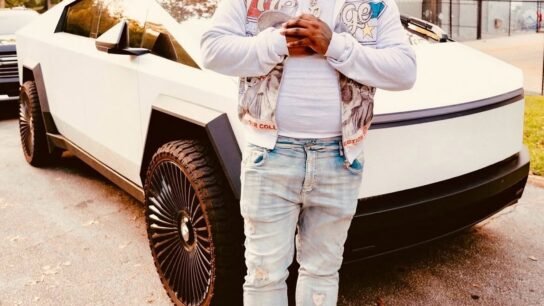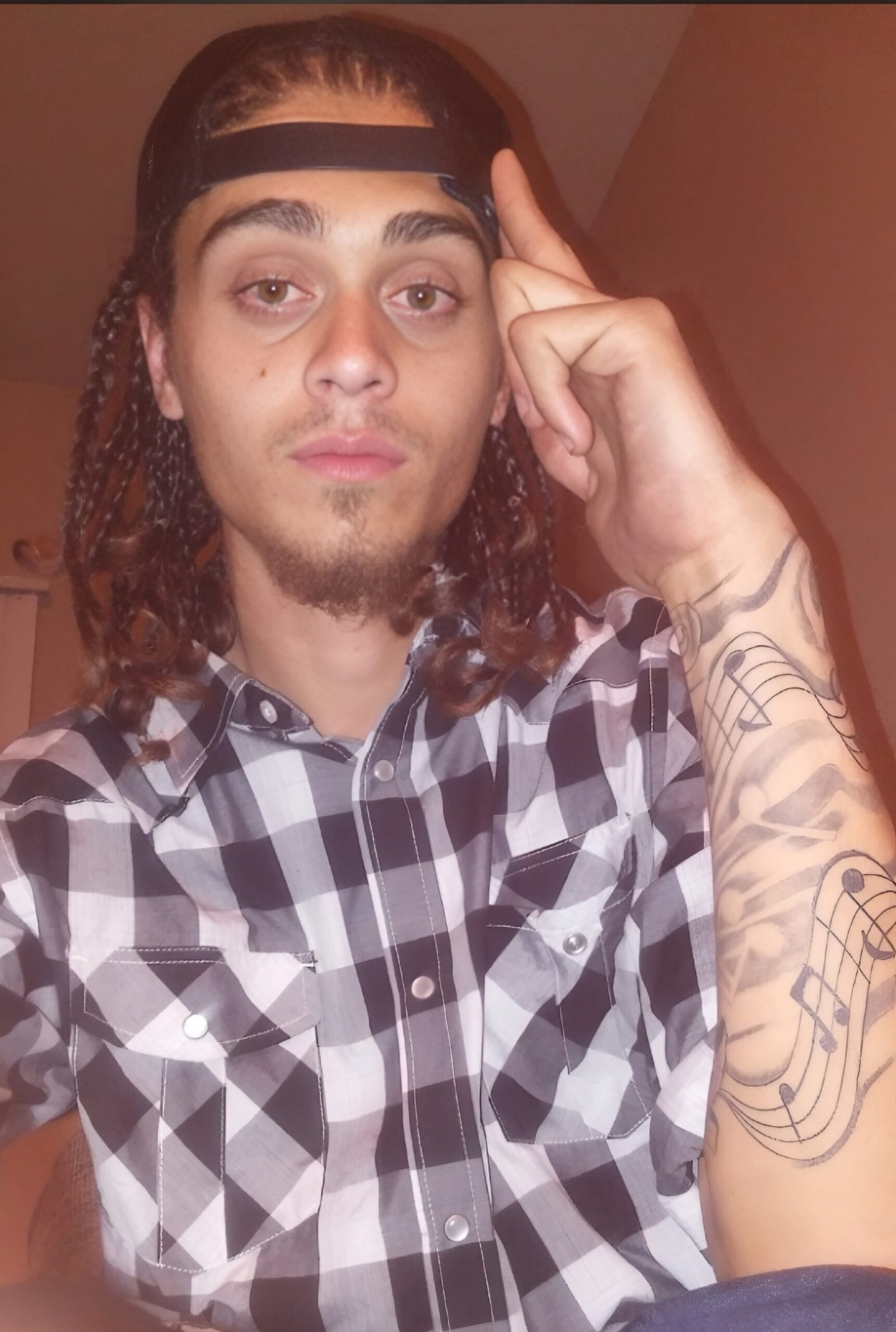
Qwik grew up in Phoenix, Arizona, in a childhood he describes as rough and, in his words, something that “kind of sucked, low key.” Behind that blunt description is a story marked by addiction, loss, and experiences that forced him to grow up early.
His mother struggled with a pill addiction and was abusive during his childhood. When Qwik was around 12 or 13 years old, he found her after she overdosed and watched her take her last breath. It was a traumatic experience that stayed with him. Just a year before losing his mother, Qwik had also lost his sister. One loss followed another, leaving him feeling like his family was disappearing “like a domino effect.”
As painful as those experiences were, Qwik says they also opened his eyes to reality and gave him a different kind of clarity about life and the way it works.
Things became somewhat more stable when he moved in with his father. Eventually, however, Qwik moved out on his own and began getting into trouble. That period led to multiple charges and cases and ultimately time behind bars. Looking back, those experiences became another part of the story he now carries into his music.
Qwik started making music during his junior year of high school at around 16 years old. It began casually, freestyling with his homies while hotboxing. What started as something to do with friends eventually became a serious part of his life.
He spent roughly four or five years freestyling before he started writing his bars down and taking the craft more seriously. Today, he has been rapping for about 12 years.
His influences have always centered around what he considers real rap. Growing up, he listened to artists from both coasts and different generations, including Pro Era, Beast Coast, Capital Steez, Flatbush Zombies, Joey Bada$$ and especially AK the Savior of The Underachievers. That period became what he describes as his lyrical phase, drawn to artists who put meaning and purpose behind their words.
At the same time, Qwik was absorbing the work of legends like Tech N9ne, Eminem, Bone Thugs-N-Harmony, Ice Cube, Dr. Dre, DJ Quik and 2Pac. From the East Coast came influences such as Big L, The Notorious B.I.G., Wu-Tang Clan, Mobb Deep, 50 Cent and G-Unit. During the COVID era, artists such as King Von, Lil 2z and Bandhunta Izzy also became part of what he was listening to.
The common thread through all of it is simple: substance.
Qwik describes his own sound as unique, clever and versatile. He doesn’t write based on trends or outside expectations. Instead, he writes according to how the beat makes him feel. The lyrics come from his own experiences, thoughts and perspective.
His writing also has another layer. Qwik says his lyrics can contain double, triple and even quadruple entendres, with meanings that may not always be obvious on the first listen. For him, there’s more to the music than simply putting words together over a beat.
And when it comes to Auto-Tune, Qwik isn’t interested.
He says he has never liked the way it sounds and has tried using it before, but ultimately decided it wasn’t for him. He’d rather let his natural voice and writing speak for themselves.
Much of the music Qwik has released today was recorded in a place he built himself: a 16-foot studio trailer that he converted into a recording studio.
His journey into engineering came from necessity as much as passion. Some of his homies, who were among the top students at CRAS, were supposed to help mix his music professionally. Tragically, one of them overdosed on heroin.
That loss, along with time spent incarcerated and losing contact with other members of his circle, forced Qwik to find another way forward. He began teaching himself how to mix and master his own music.
Being a perfectionist, he didn’t stop at simply learning enough to get by. He started mixing for other artists so he could sharpen his skills, eventually developing the ability to handle more of the creative process himself.
Even outside of music, Qwik wasn’t someone who spent much time hanging out around town. He says he was never really the type to be out and about. Most of the time, people came to his place. If he did go somewhere, it was usually to show face, handle whatever he needed to handle, and leave.
He preferred having things under his own control because, as he puts it, you never know what other people might be on.
That same mindset carries into his music. Everything is personal, intentional and rooted in his own experiences.
Qwik’s latest release is “On My Mind,” while his current mixtape, “Lose 2 Learn,” is available now. He’s also constantly working on new material and dropping music regularly, with more content available through platforms like BandLab and Rap Fame as he continues building his catalog.
Through everything he’s experienced, Qwik has continued to create. The losses, the mistakes, the time behind bars, the people he’s lost and the lessons that came from it all have become part of his perspective.
His story isn’t built around pretending life was easy. It’s about taking what happened, learning from it and putting it into the music.
Qwik gives a shout-out to @sal_098, @merodgerson and @djtru_official for the time they’ve invested in helping him advance his craft and guiding him along the way. He also gives love to everyone who has believed in him and supported his journey.
Even the people who doubted him get a mention.
Because for Qwik, every part of the journey has played a role in getting him here.
And he’s still writing the story.